Clarify who owns client communication and how feedback returns to the working team.
Home / Agency & Partners
Agency & partner support
A production and merchandise partner for ideas worth delivering well.
We support agencies, designers and partner teams with product sourcing, customization, packaging, assembly and delivery planning while keeping roles, approvals and client communication clear.
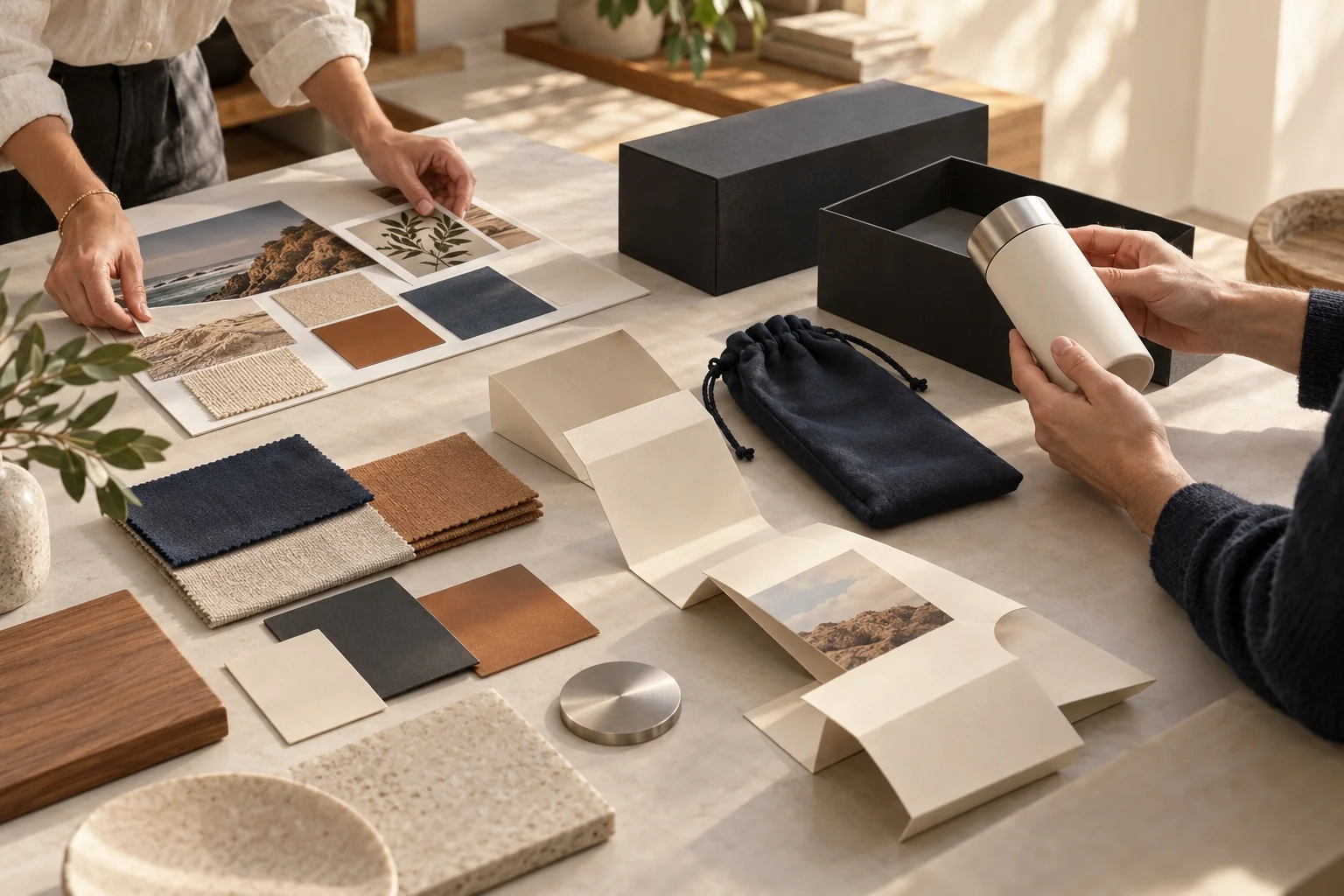
Identify who can approve product direction, artwork, samples, packaging and release.
Record what is fixed, what is still being tested and which commitments remain subject to review.
Who the partnership is for
Built for teams with an idea, a client or a program to protect.
Partnership support begins where creative direction meets physical production. The right working model depends on the relationship already in place and the decisions still open.
Creative and brand agencies
For campaign teams that need merchandise to carry an existing concept without losing the logic behind it.
Design studios
For designers translating a visual system into suitable materials, decoration, packaging and physical scale.
Event and activation partners
For teams connecting attendee experience, venue conditions, distribution and must-arrive timing.
Consultants and channel partners
For partners bringing a qualified need and requiring a clearly defined route from introduction to delivery.
Ways to work together
Choose the relationship before choosing the merchandise.
There is no assumed partnership format. We define how MerchWorthy appears, who holds the client conversation and where responsibility changes hands before work begins.
Execution behind an established direction.
The partner leads the client relationship and creative intent. MerchWorthy reviews feasibility, develops the physical route and reports through the agreed contact.
A joint path through the open decisions.
Both teams join selected working sessions. Creative, product, packaging and operational questions move through one visible approval sequence.
A deliberate handoff with context intact.
The partner introduces the project and defines the continuing role. MerchWorthy takes the agreed conversation forward without guessing how credit or ownership should work.
Commercial arrangements are project-specific. White-label presentation, exclusivity, referral or commission structure, payment terms, confidentiality and client ownership are agreed separately when relevant.
Inputs and approval responsibilities
One project, two responsibility lines.
Each stage names the lead action and the evidence needed to move forward. This keeps creative feedback, production facts and client approval from collapsing into one ambiguous “go.”
01
Frame the client intent.
Audience, purpose, brand system, campaign context and communication model.
Partner-led inputRead the operational brief.
Open questions, constraints and the evidence required before a direction can be treated as workable.
Feasibility response02
Protect the creative standard.
Desired impression, must-keep ideas, references and routes the client does not want.
Creative guardrailsMap physical options.
Materials, decoration area, construction, packaging fit, quantity status and delivery implications.
Direction development03
Consolidate feedback.
One decision trail identifies comments, revisions and the person authorized to approve.
Approval ownershipBuild the proof route.
Artwork views, specifications, samples or physical checks are matched to the risk being resolved.
Evidence planning04
Release confirmed inputs.
Approved artwork, destinations, message pieces, recipient data and any client policies.
Final handoffCoordinate the finished program.
Production, checks, assembly, pack-out and the agreed delivery route proceed from the released specification.
Execution controlProduct, packaging and delivery support
From concept deck to physical program.
MerchWorthy connects the visible idea to the less visible decisions that determine whether the finished merchandise can be approved, assembled and delivered as intended.
Product direction and feasibility
Translate audience, purpose and brand cues into a focused physical direction, then test materials, construction and quantity assumptions.
Review Curated Ideas →Customization and artwork handoff
Match the identity to suitable decoration areas and proof stages instead of forcing one logo treatment across unlike surfaces.
See Branding Options →Packaging, inserts and assembly
Coordinate the unboxing sequence, protective structure, printed pieces, versions and pack-out controls around the selected contents.
Explore Packaging & Kitting →Quality and delivery planning
Define the checks, release points, cartons, destinations and arrival route that the project actually requires.
Review Quality Planning →Confidentiality, image and client-use boundaries
The working rules stay visible.
A partner project can involve sensitive context and several decision-makers. Naming the boundaries early protects the client relationship and prevents production assumptions from becoming accidental promises.
Discretion is a defined workflow, not a vague assurance.
Tell us what may be shared, who may see it and how MerchWorthy should appear. If an NDA, restricted artwork route or client-facing protocol is needed, it is reviewed before sensitive material enters the workflow.
Client relationship and communication
Name the lead contact, meeting roles, feedback path and client-facing identity.
Logos, artwork and photography
Record permitted use, approval authority and whether finished work may be photographed or referenced.
Commercial and partnership terms
Document quotations, payment, referral, commission, exclusivity and ownership separately from the creative brief.
Claims and production commitments
Keep material claims, tests, quantities, timing and delivery dependent on project-specific confirmation.
Partnership questions
Agency & Partner FAQ.
These answers set the default planning boundary. The final relationship is documented around the actual project and parties involved.
Can an agency stay the lead client contact?
Yes, when that communication model is agreed for the project. The brief should identify who speaks with the client, who consolidates feedback and who can release each approval.
Do you offer white-label support?
A discreet or partner-led working arrangement can be discussed, but it is not a blanket promise. Brand presentation, communication, confidentiality and client-facing roles must be documented for the specific engagement.
When should MerchWorthy join the project?
The most useful point is before product, artwork, packaging and arrival timing are treated as fixed. We can also review a developed direction to identify feasibility questions before production release.
Can you review an existing creative deck or specification?
Yes. References, layouts, specifications and packaging concepts can be used as working inputs. They still require review against materials, decoration area, construction, quantities and delivery conditions.
Are referrals, commissions or exclusivity standard?
No standard public arrangement is assumed. Referral, commission, exclusivity, payment and client-ownership terms must be agreed in writing for the relevant relationship.
Start the working relationship
Show us the idea and the handoff around it.
Share the project stage, the client-facing structure and the support already needed. We will use the first review to separate creative inputs, feasibility questions and approvals that still need an owner.