Anchor item
The object that carries the main use, presence or perceived value.
This is a library of starting directions rather than preset kits. Each one brings products, packaging and message content into a system that can be adapted to your audience, brand, quantity, budget, timing and delivery plan.
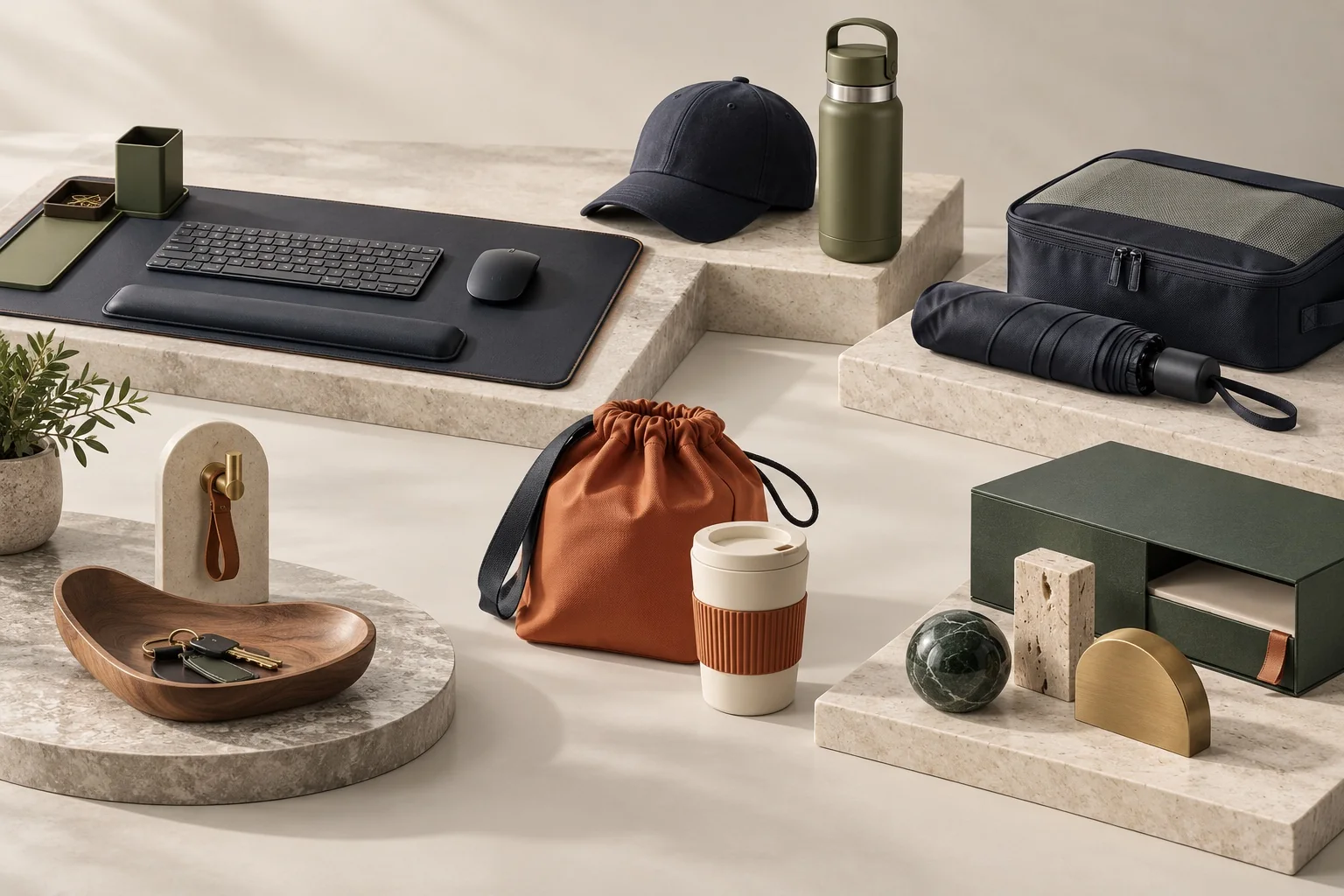
Some projects begin with a desk surface, others with arrival, travel, home or a milestone. Organizing ideas by the way they will be used makes it easier to judge what deserves a place—and what can be left out.
Not every project needs all five. The structure helps us decide where usefulness, presentation and brand meaning should carry the most weight.
The object that carries the main use, presence or perceived value.
Smaller objects that remove friction or extend the anchor into a routine.
A pouch, tray, sleeve or carrier that continues to work after delivery.
The insert, sequence or context that explains why this combination belongs.
The structure that protects, presents and suits the way recipients receive it.
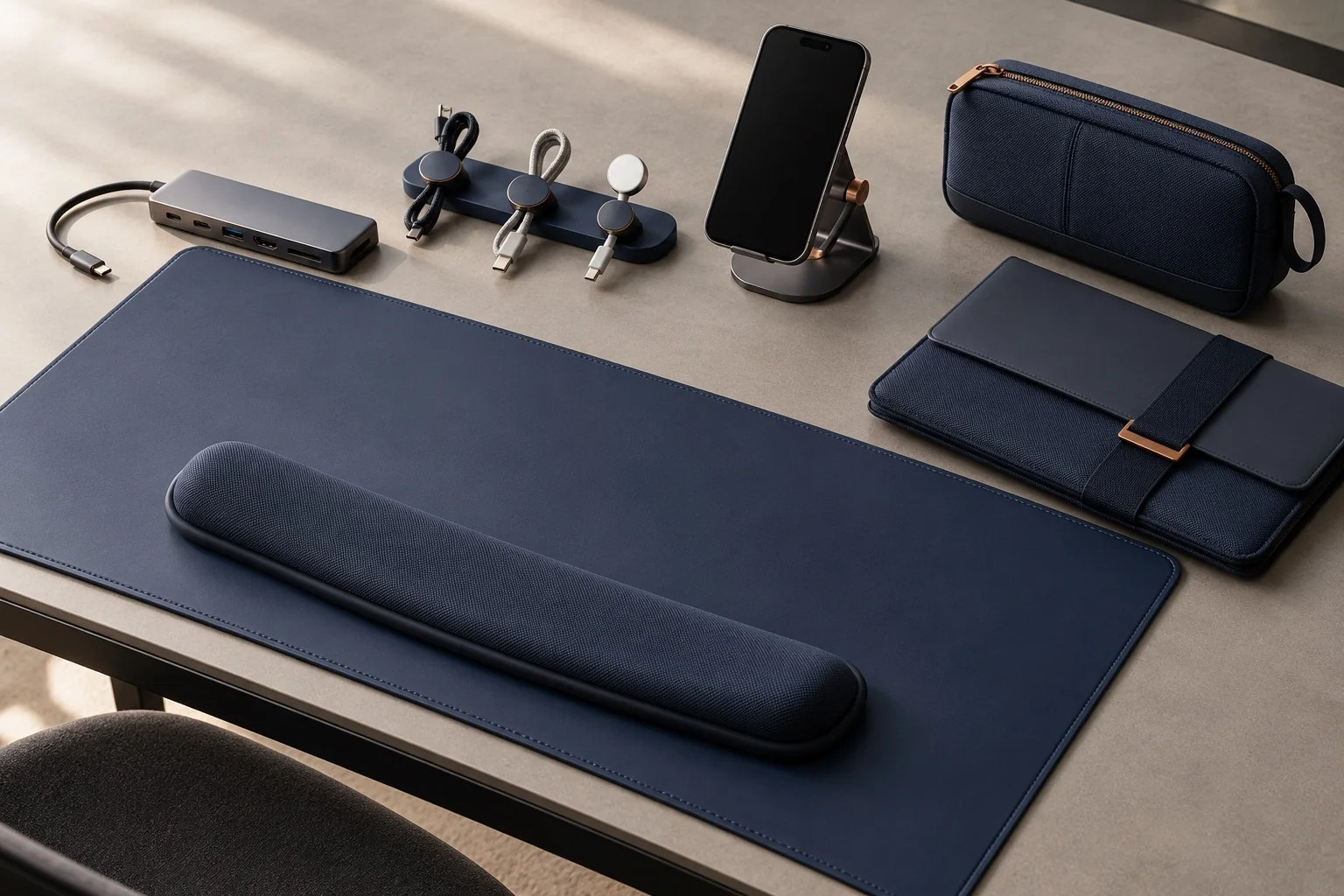
One substantial workday anchor can be supported by compact tools that reduce clutter, protect equipment or make switching locations easier. The presentation can become part of the organization instead of being discarded.
A coordinated surface for calmer daily work, supported by the accessories that keep power, cables and devices in order.
A portable work direction for participants who need to move between sessions, shared tables and the trip home.
A non-PPE handoff system that keeps drawings, small essentials and follow-up materials together across jobsite and office.

Welcome merchandise works hardest when it removes uncertainty and provides something useful from the first interaction. The mix can introduce a product, a campus or a new place while still feeling personal to the recipient.
A customer-facing set that gives adoption materials and practical desk support one clear place to live.
A pre-arrival direction that builds confidence before campus life starts and leaves students with useful first-week items.
A move-in handoff shaped around the local routine, with practical cues that help a new place feel easier to navigate.
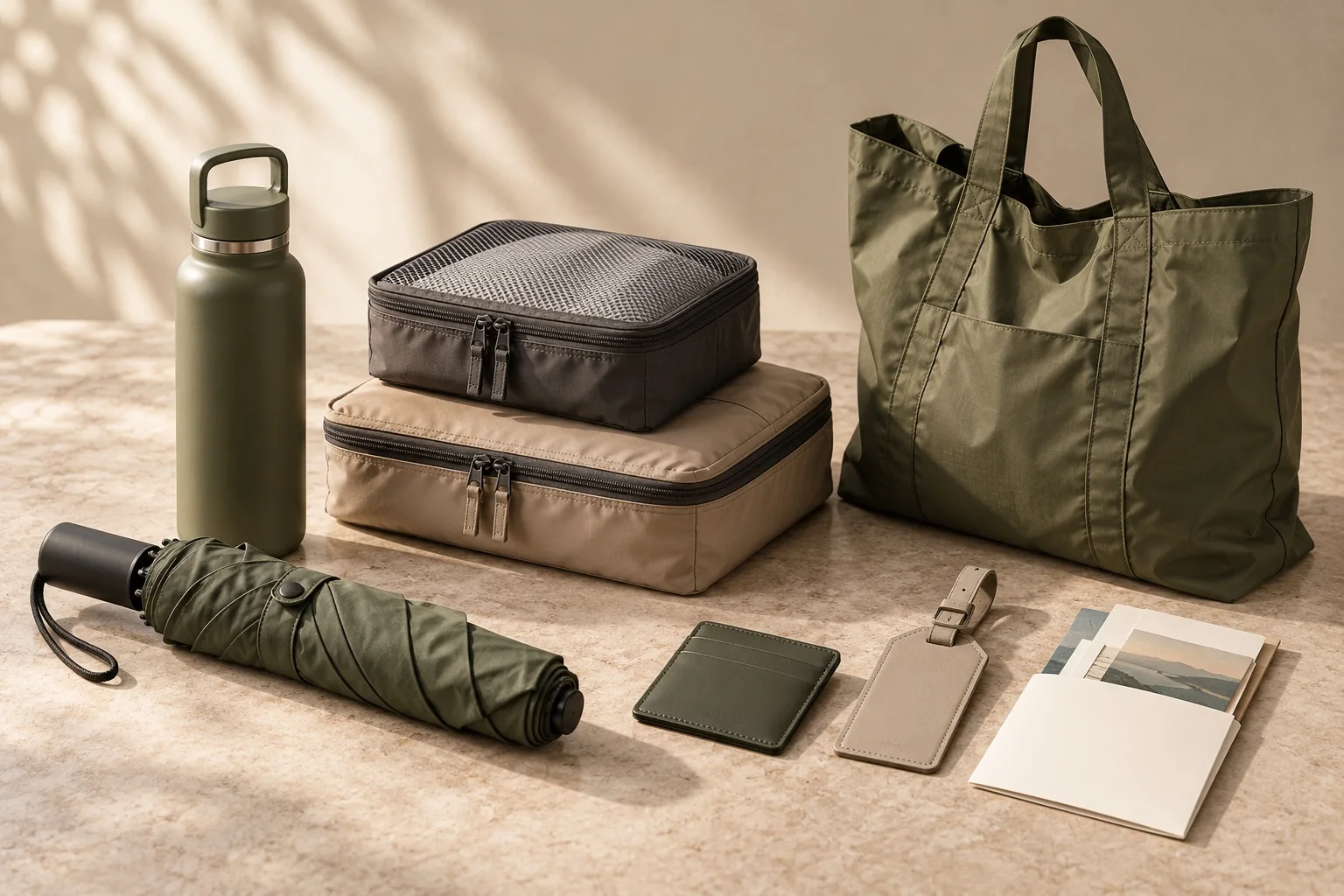
Movement changes what belongs in the set. Weight, access, portability and the order in which people need each item matter as much as the contents themselves.
A lightweight system for walking, checking in and keeping first-day essentials close without adding bulk.
A room handoff that anticipates the guest’s first outing, from carrying small essentials to adapting to the weather.
A coordinated arrival sequence for groups that must identify, orient and equip attendees without slowing down check-in.
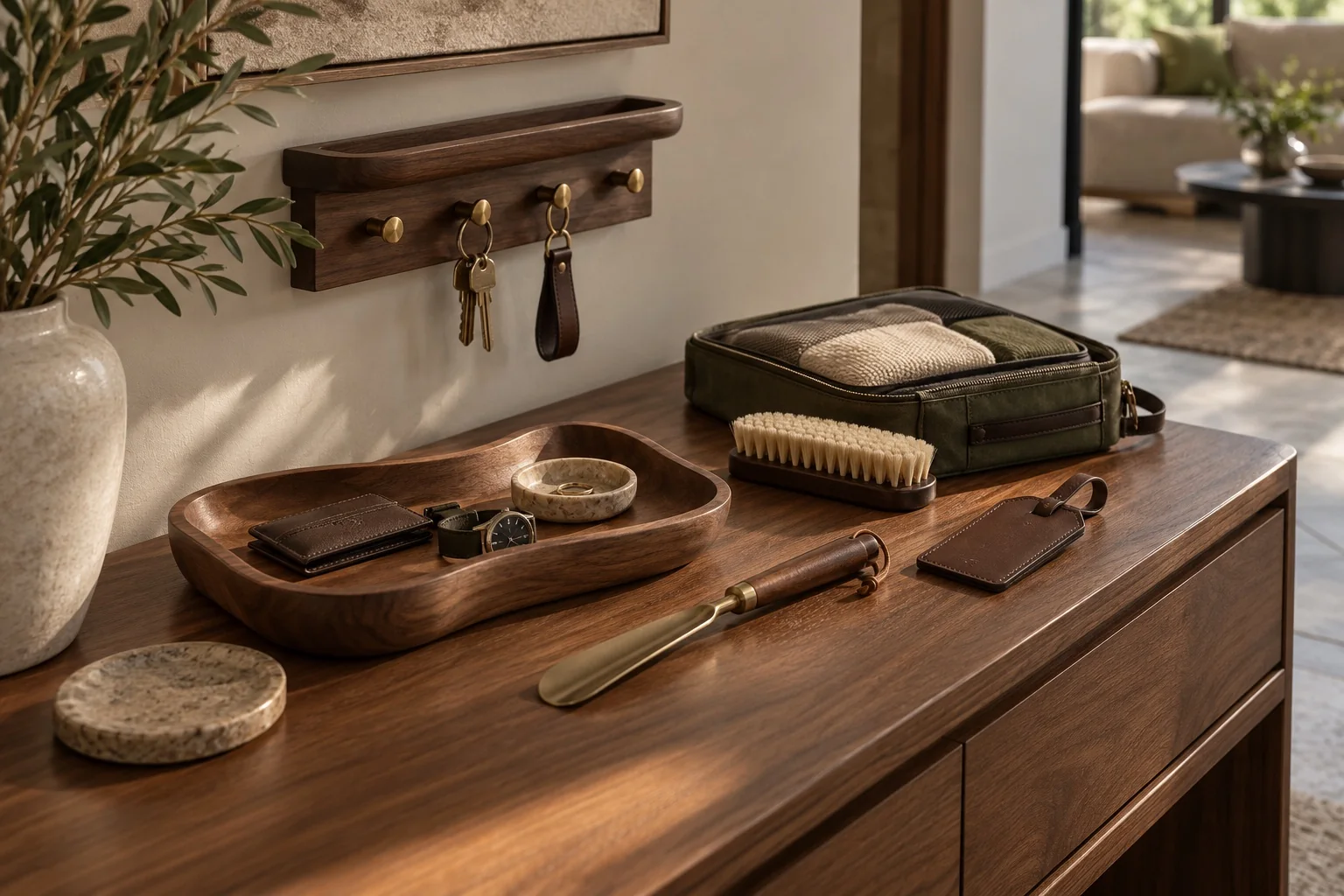
The most enduring directions often attach to a repeated habit: arriving home, placing keys, caring for clothes or organizing belongings after travel. Daily visibility can carry the brand without demanding attention.
A considered place for the objects residents handle every time they leave or return.
A compact home-care direction that stays near the door and earns use through small, recurring tasks.
A departure-stage system that helps guests repack, separate and carry what should continue beyond the stay.

Recognition can live in materials, form and sequence instead of relying on a generic trophy. A useful object or composed set can hold the story of a project, institution or shared achievement.
A commemorative direction that connects the institution to the recipient’s next chapter through objects worth displaying or using.
A finished-project narrative translated into material references and desk objects for owners, partners or project teams.
A scalable event-to-keepsake program that marks the date and role of the people moving the project forward.
You may already have one product in mind, a packaging reference, a strict budget or a list supplied by your team. That is enough to begin. We can test how the pieces work together and identify what is still missing.
Build the surrounding utility and presentation around an item you already want.
Use a travel carrier with a welcome system, or a home object with a milestone story.
Fewer, better-related components can create a stronger experience than a crowded box.
Materials, dimensions, decoration, samples, packaging and routing are confirmed for the chosen direction.
These visual families help buyers explore possibilities without turning the site into a fixed product catalog.
Share the audience, setting and any item, visual reference or practical constraint already decided. We will return with a focused combination to evaluate rather than an undirected catalog.