Hold every component with intent
Dimensions, weight, fragility and access determine how pieces should sit, separate and stay secure.
We coordinate packaging, printed content, product arrangement and assembly around the way the merchandise will be presented, handled and delivered.

A strong format must suit the products, make the handoff intuitive and remain practical through the route it will travel. Those decisions belong together.
Dimensions, weight, fragility and access determine how pieces should sit, separate and stay secure.
Sleeves, inserts and message layers can guide what recipients see first without crowding the experience.
A desk delivery, event pickup and individual shipment place different demands on protection and format.

The right solution may be a refined box, a reusable carrier or a simple paper system. Format follows the recipient, contents, presentation moment and shipping route.
Creates a composed reveal when the moment and perceived value need emphasis.
Supports individual transit and can contain a separate presentation layer inside.
Works when the carrier should remain useful after the products are removed.
Connects separate pieces with a lighter material footprint and compact profile.
Controls fit, separation and the order in which components become visible.
Explains the occasion, product role or next action without over-branding each item.
Pack-out begins with a controlled component map. Contents, sequence, inserts and destination rules are defined before assembly so each recipient receives the intended version.
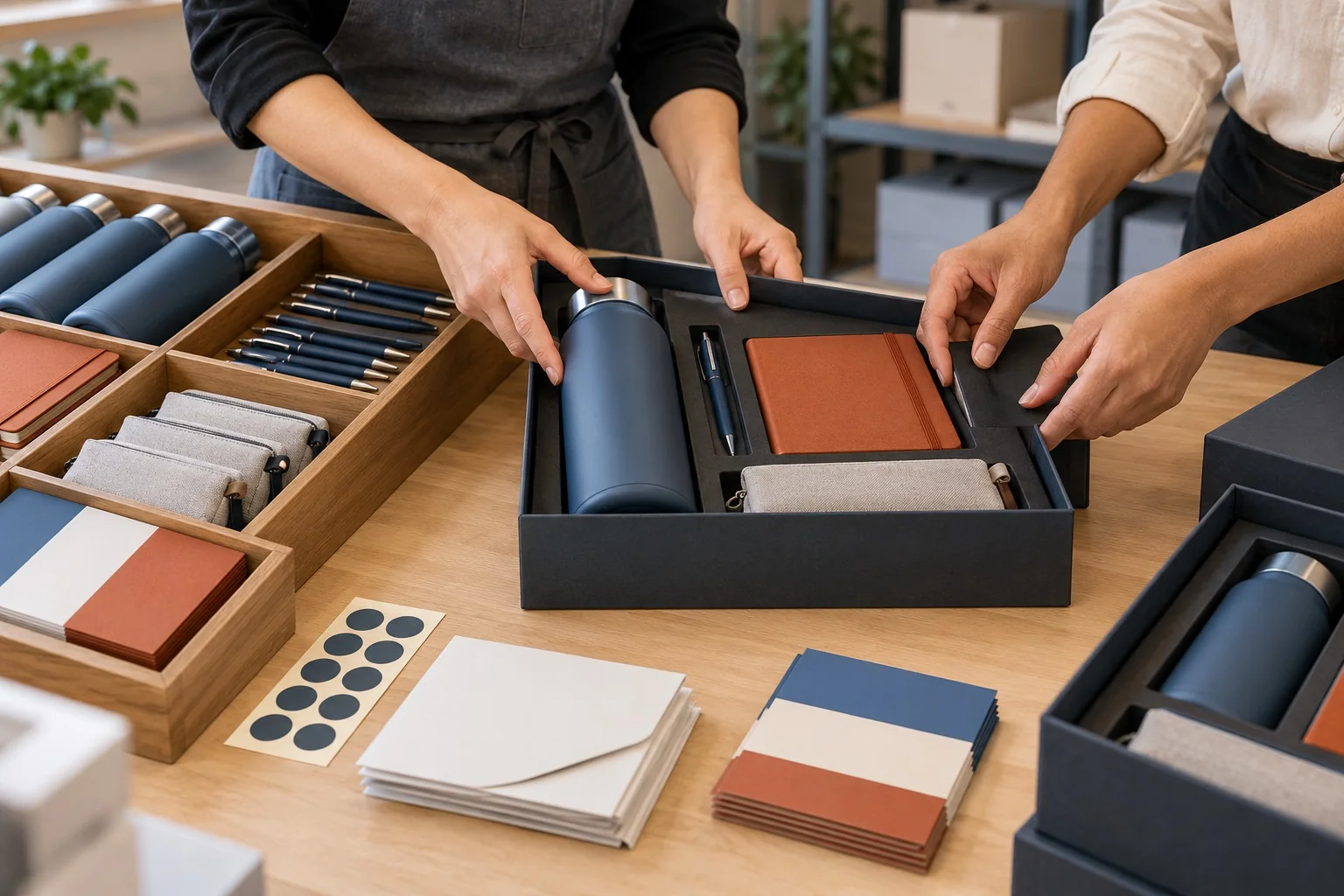
Record what belongs in the set and which parts vary by recipient or program.
Define placement so the set can be assembled consistently and opened naturally.
Distinguish teams, locations, languages or audience groups before final packing.
Apply the agreed outer marking and routing information after the contents are checked.
Packaging review goes beyond whether the box closes. The visible surfaces, component count, fit and final presentation need their own checkpoints.
Review visible finish, color consistency, print placement and obvious damage.
Confirm the required components and printed pieces for the correct kit version.
Check movement, pressure points, separation and whether items can be removed cleanly.
Inspect the final seal, outer protection and identifiers used for the planned route.
Distribution changes the packaging decision. We plan the inner presentation and outer protection around the confirmed delivery model rather than treating shipping as an afterthought.
Completed kits travel together to one office, partner or receiving point.
Pack-outs support staged distribution, check-in or room-level placement.
Address count, destinations and routing rules are agreed before the shipping plan is confirmed.
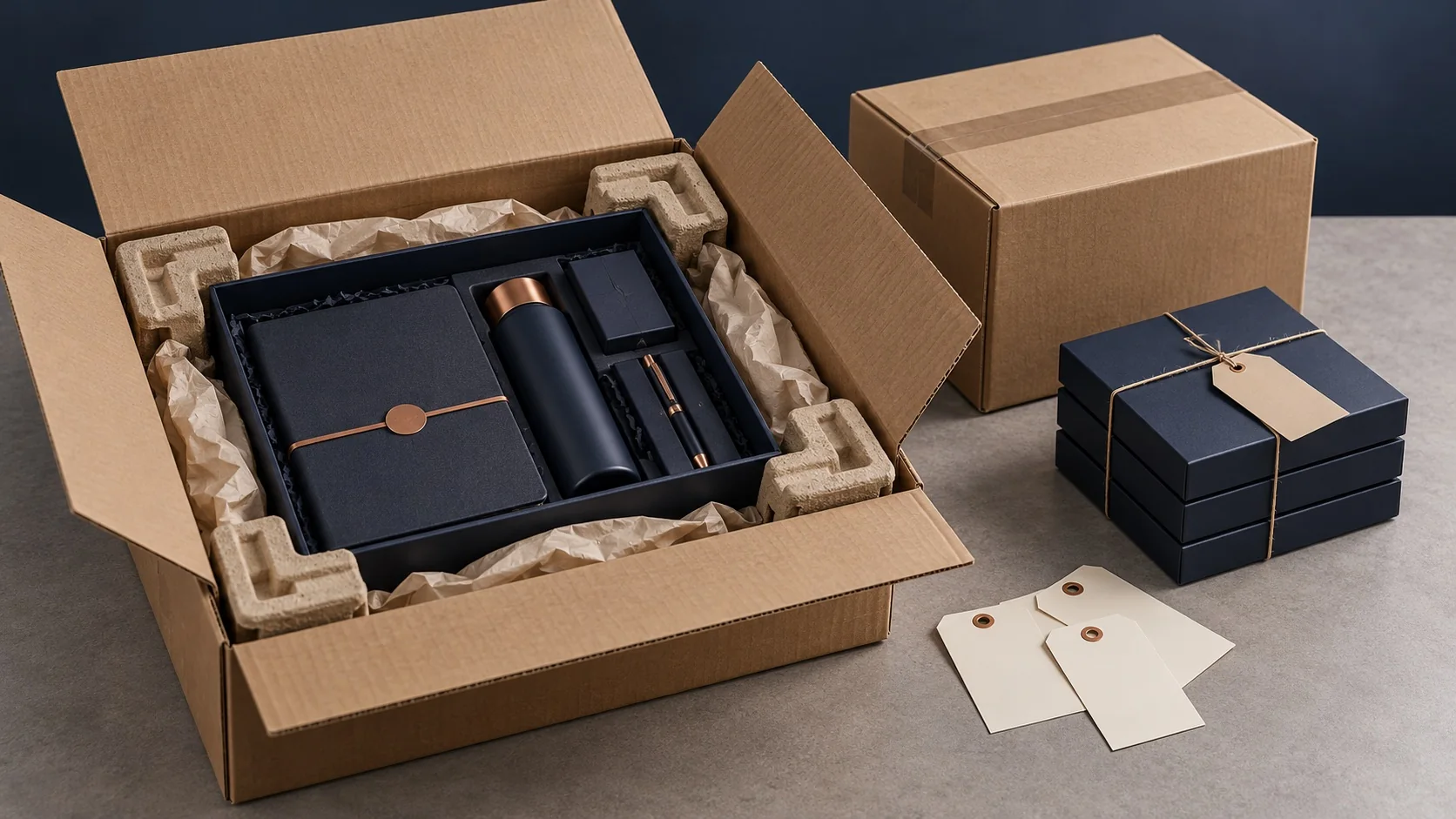
No format is selected in isolation. The final specification depends on real dimensions, materials, versions, quantity and route—all of which are confirmed for the project.
Long, fragile or irregular pieces affect inserts, protection and carton efficiency.
Every added layer and component influences handling and chargeable transport weight.
Rigid, folding and textile formats require different tooling, assembly and storage space.
Recipient groups, colors and inserts increase the control needed during pack-out.
One receiving point and hundreds of individual addresses create different requirements.
Product, artwork, packaging fit and shipping details must align before production proceeds.
These answers define the planning boundary before material, construction and production details are verified.
Share the known contents, recipient moment, quantity and delivery route. We will identify the packaging and pack-out decisions that still need to be resolved before a finished specification can move forward.